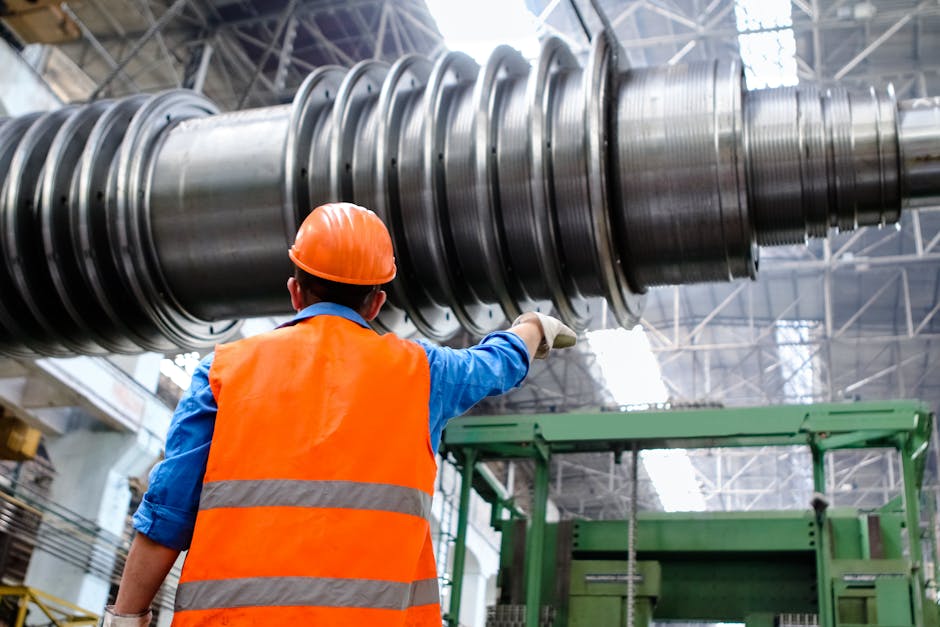
A Quick Start Guide to Understanding Turning Centers

Introduction to Turning Centers

Are you finding it challenging to keep your industrial machinery functioning with precision, longevity, and reliability? The vital component your manufacturing operations might need is a Turning Centre. Let’s shed some light on this crucial machinery and help you unravel the solution for maintaining the quality of your industrial machinery.

A turning centre, often compared with a traditional lathe, is not just an ordinary machine. It’s a powerful piece of equipment that offers several operations, all in one place. Be its threading, drilling, reaming, or even knurling, a turning centre empowers manufacturing with its advanced functions, vastly surpassing the capabilities of a standard lathe. Considering the evolvement of turning centres from ancient lathes to modern CNC machines, it’s apparent that turning centres are more than just a step up. Here at TMC Technologies, we acknowledge their efficacy and versatility, employing these extraordinary crafting masters to deliver superior results in CNC lathe parts.

Crucial Information About Turning Centers:

  • Turning centres come with a computer numerical control (CNC).
  • They can perform several operations such as threading, drilling, reaming, and knurling.
  • There are primarily two types: horizontal and vertical.
  • Turning centres are suitable for heavy-duty cutting of large and heavy workpieces.

Infographic Explaining the Basic Functions of a Turning Centre - turning centre infographic infographic-line-5-steps

Understanding the Components of a Turning Center

Let’s delve into the main components of a turning center, which are crucial to its operations.

The Main Spindle

The main spindle, housed within the headstock, is the heart of a turning center. It’s where the workpiece is held for machining. The spindle bore or bar capacity determines the maximum diameter of a workpiece that can be mounted. This component is typically located on the left side of the turning center.

The Cutting Tool

The cutting tool is attached to a turret and is guided and fed against the workpiece by the carriage. This tool performs the actual cutting operations, shaping the workpiece into the desired form. The tool’s position can be precisely controlled along multiple axes, allowing for complex shapes and features to be machined with high precision.

The Multiple Axes

Turning centers can have multiple axes of movement. A basic CNC lathe, for instance, is a 2-axis machine, controlled along the X and Z axes. More advanced turning centers, like those we offer at TMC Technologies, can have up to 5 axes, offering greater versatility in machining operations. These axes allow the turning center to perform tasks like turning, drilling, tapping, and milling, using live tools for enhanced functionality.

The Protective Enclosure

Turning centers are typically housed within a protective enclosure. This is a safety feature that keeps chips, coolant splashes, and other debris within the machine, protecting the operator and the surrounding environment. The enclosure also helps to contain noise and vibration, improving the overall working conditions in the machine shop.

In summary, understanding these components and their roles is crucial to maximizing the efficiency and precision of the turning center. At TMC Technologies, we leverage these features to deliver top-tier CNC lathe parts and additional machining services, ensuring the accuracy and longevity of our clients’ machinery.

The Difference Between a Lathe and a Turning Center

After understanding the key parts of a turning center, it’s important to discern the difference between a lathe and a turning center. This distinction will help us appreciate the enhanced capabilities of modern turning centers.

The Basic Functionality of a Lathe

A lathe is one of the oldest machining tools, tracing its roots back to ancient civilizations. It’s a simple machine that performs a single task: turning. The lathe rotates a workpiece about an axis, while the cutting tool shapes the workpiece.

The CNC lathe, a more recent development, is a 2-axis machine (X and Z-axis) that’s computer-controlled and generally has one spindle. It’s often a flat-bed type and may have a minimal protective enclosure around the machine and the machine ways.

The Advanced Capabilities of a Turning Center

A turning center, on the other hand, is a step up from a lathe. In our daily operations at TMC Technologies, we utilize the enhanced abilities of turning centers to bring our clients superior machining services.

Turning centers are not only capable of turning, but they can also handle advanced tasks such as facing, threading, knurling, drilling, boring, reaming, and taper turning. More advanced turning centers can perform milling and drilling operations, thanks to the C-axis functionality.

CNC turning centers are computer-controlled, just like CNC lathes, but they are more powerful, with 3, 4 or 5 axes and more versatile capabilities. They usually have full machine enclosures to keep chips and coolant splashes within the machine, increasing safety and cleanliness in the workplace.

The Safety Features of a Turning Center

A key advantage of turning centers over traditional lathes is their safety features. Turning centers are generally slant-bed type machines with full enclosures, which keep chips and coolant splashes contained. This not only ensures a cleaner work environment but also reduces the risk of accidents, promoting safety in the workplace.

We at TMC Technologies prioritize safety, so we value the enclosed design of turning centers. We understand that the safety of our team members is paramount to delivering high-quality and reliable service to our clients.

In conclusion, while lathes are basic turning machines, turning centers offer a more comprehensive range of capabilities. These advanced features make turning centers a versatile and efficient choice in a machining environment, delivering high-quality results with a focus on safety.

The Types of Turning Centers and Their Applications

Now that we’ve established the difference between lathes and turning centers, let’s delve into the specifics of different types of turning centers. Essentially, there are two primary classifications based on orientation: horizontal and vertical turning centers. Each type comes with its unique advantages and is used in various industries.

Horizontal Turning Centers

The most common type is the horizontal turning center. As the name suggests, the spindle axis in these machines is horizontally aligned. The workpiece is held in place by a chuck, which is attached to the spindle. The cutting tool then moves along different axes to shape the workpiece.

Horizontal turning centers are known for their efficiency and versatility. They can perform a wide range of tasks, including facing, threading, knurling, drilling, boring, reaming, and taper turning, making them ideal for various applications.

Vertical Turning Centers

On the other hand, vertical turning centers – often referred to as a Vertical Turret Lathe or VTL – have a vertically aligned spindle. This unique design optimally uses gravity for stability, minimizing inaccuracies and reducing the clamping force needed for workpiece holding. As a result, vertical turning centers can handle larger and heavier workpieces without compromising precision.

Moreover, their compact design allows for optimal use of floor space, an essential factor in manufacturing units where space is at a premium. Vertical Turning Centers also excel in heavy-duty cutting of large workpieces, as TMC Technologies has observed in its operations.

The Industries that Use Turning Centers

Turning centers, owing to their versatility and precision, are employed in a multitude of industries. From aerospace, automotive, and medical industries to the production of industrial machinery and electronic devices, turning centers have revolutionized the landscape of manufacturing.

For instance, the aerospace industry requires intricate components made with extreme precision. Turning centers step in to deliver these high-quality parts, ensuring the reliability of aircraft systems. In the automotive industry, turning centers are used to produce everything from engine parts to brake components.

At TMC Technologies, we leverage the power of turning centers to deliver top-tier CNC lathe parts and additional machining services. Our commitment to precision and quality ensures the accuracy and longevity of our clients’ machinery, addressing the pain points of our manufacturing partners.

turning centre - turning centre

Whether you need components for your industrial machinery or require custom applications, turning centers can provide an efficient and highly precise solution. Understanding their types and applications can help you make an informed decision for your manufacturing needs.

The Technology Behind Turning Centers

The technology that powers turning centers is a blend of software and mechanical engineering, and it’s this combination that enables the high precision and productivity we see in modern manufacturing.

The Use of CNC in Turning Centers

A crucial component of this technology is Computer Numerical Control (CNC). CNC is a pre-programmed software that instructs and operates factory machinery like lathes and mills to produce components with pinpoint accuracy. The use of CNC in turning centers allows for automated and consistent manufacturing, which is essential in ensuring the high quality of the components.

The CNC system is made up of three major components: the interface, the drive system, and the feedback system. All these components work in harmony to produce CNC turned components with impressive precision and consistency.

The Role of MAZATROL Programming Language in Turning Centers

As we at TMC Technologies have observed, another significant aspect of turning center technology is the use of the MAZATROL programming language. This language was developed specifically for turning machines and offers the versatility to handle parts from simple to complex, requiring 4-axis turning operations.

MAZATROL allows for either conversational programming or G-code programming (EIA/ISO), or even a combination of the two, thus providing versatility in programming and operation. This flexibility allows manufacturers to optimize their production processes, reducing work-process time and boosting productivity.

The Difference Between CNC Turning and CNC Milling

While both CNC turning and CNC milling are techniques used in manufacturing, they are used for different types of operations. Turning centers perform rotating spindle operations while machining centers carry out a turning type operation. The key difference lies in the type of movement that the cutting tool and workpiece make. In CNC turning, the workpiece rotates while the cutting tool moves in a linear fashion. In contrast, CNC milling involves the workpiece remaining stationary while the cutting tool rotates and moves along different axes.

In conclusion, the technology behind turning centers is a magnificent blend of software and machinery, combining to produce components with high precision and consistency. As we continue to push the boundaries of manufacturing capabilities at TMC Technologies, we remain committed to leveraging the best that technology has to offer. Understanding these fundamental concepts not only aids in making informed decisions about your machining needs but also opens up new possibilities in the realm of CNC machining.

The Benefits of Using Turning Centers in Manufacturing

As we delve deeper into turning centers, we can’t ignore the numerous benefits these advanced machines offer in the manufacturing sector. Turning centers are more than just another machine on the manufacturing floor. They bring a wealth of advantages, including versatility, efficiency, and productivity.

The Versatility of Turning Centers

One of the most significant benefits of turning centers is their versatility. Unlike traditional lathes, turning centers can perform a variety of tasks, including facing, threading, knurling, drilling, boring, reaming, and taper turning. This versatility enables us to create a wide range of parts, from simple to complex, all with the same high level of precision. And as we’ve seen with Vertical Turning Centers, their compact and heavy-duty design, optimal use of gravity for stability, and suitability for heavy workpieces make them a versatile asset in any manufacturing environment.

The Efficiency of Turning Centers in Reducing Work-Process Time

Turning centers also outshine in terms of efficiency. The simultaneous operation of multiple axes allows for faster production times without compromising on accuracy or quality. This efficiency is a game-changing factor for industries that require top-tier quality components and additional machining services for custom applications. As machining components manufacturers, we understand the value of time in today’s fast-paced industrial landscape. Using turning centers, we are able to deliver meticulously crafted parts designed to optimize the performance of various machinery, all in a timely manner.

The Role of Turning Centers in Boosting Productivity

Finally, turning centers play a crucial role in boosting productivity. The advanced capabilities of these machines allow us to handle complex jobs with increased efficiency and accuracy. This not only enhances operational efficiency but also contributes to the longevity and reliability of equipment. By leveraging the power of turning centers, we are able to meet and even exceed the expectations of our clients in various industries such as medical, automotive, defense, electronics, and oil & gas.

In conclusion, turning centers are a testament to the power of innovative design and the strategic use of physical forces. Their versatility, efficiency, and productivity-enhancing capabilities make them an invaluable asset in modern manufacturing. As we continue to explore and leverage the best that technology has to offer at TMC Technologies, we remain committed to providing top-tier quality components and advanced machining services that drive growth and innovation in the manufacturing industry.

Conclusion: The Future of Turning Centers and Their Role in Modern Manufacturing

As we move towards the future, the role that turning centers play in manufacturing continues to evolve. The digital age has ushered in a new era of manufacturing, with Industry 4.0 taking the helm. In this new age, interconnected machinery and systems communicate and make decisions autonomously, further enhancing precision and efficiency. The introduction of smart factories will undoubtedly revolutionize how we design, manufacture, and deliver machined components.

At TMC Technologies, we are proactive in responding to these changes. We continually innovate and adapt to the evolving landscape, ensuring that we remain at the forefront of the turning center revolution. Our commitment to leveraging advanced CNC capabilities, incorporating advanced sensors and control systems, and employing conversational control programming, enables us to ensure the flexibility and capability of our vertical turning centers and Swiss-type turning machines.

The future of turning centers not only lies in the hands of manufacturers who are able to adapt to these evolving needs but also in the ability to unlock new levels of precision, efficiency, and innovation. Turning centers are more than just machines; they represent a path to manufacturing excellence. As we step into this future, we are excited about the new possibilities that these developments will bring.

Turning centers are set to become even more vital in manufacturing, driving the next wave of manufacturing excellence. Through the enhanced precision, efficiency, and versatility offered by these machines, manufacturers like us can continue to provide the highest quality parts and the most reliable services to our customers.

In conclusion, the future of turning centers is a landscape of endless possibilities and opportunities. We remain committed to being your trusted partner in this journey, providing you with the tools and expertise you need to succeed. As we continue to embrace digital transformation and innovation, we look forward to a future where precision, efficiency, and quality are the hallmarks of every component we produce.

For more information about our turning centers and the services we provide, explore our machined components or precision turning services. Let us be your guide in this exciting journey towards the future of turning centers.
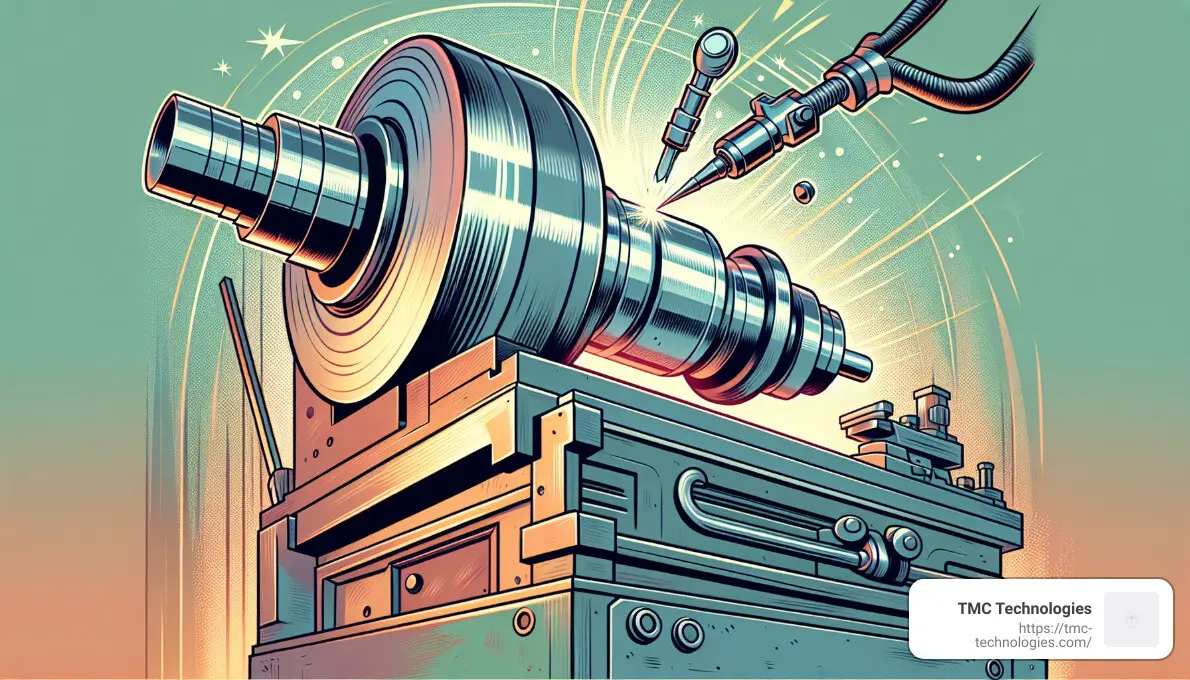
turning centre - turning centre

A Comprehensive Guide to Vertical Turning

Introduction to Vertical Turning

Ever found yourself struggling with complex, heavy workpieces? Or perhaps found it challenging to produce high-precision components while optimizing manufacturing floor space? These are common issues many manufacturing industries face. The solution to tackle these obstacles lies in a machining process that you may not be taking advantage of yet — vertical turning.

As the name implies, vertical turning flips conventional lathes on their side, positioning the spindle in a vertical plane. This unique layout isn’t just for looks. It unlocks an array of benefits that set vertical turning lathes (VTLs) apart from their horizontal counterparts, making them ideal for handling heavy, large-diameter workpieces.

Here at TMC Technologies, we specialize in vertical turning, providing an efficient, compact, and high-precision solution for your machining needs. This guide walks you through the nitty-gritty of vertical turning and how it could revolutionize your manufacturing process.

A quick overview of Vertical Turning:
Orientation: The spindle is positioned vertically in a fixed manner.
Workpiece Movement: The workpiece spins up and down to align with the cutting head.
Complexity: VTLs are generally less complex than horizontal lathes.
Benefits: Ideal for single-sided projects, excels in situations where workpiece sagging might occur, economical use of floor space.

Infographic showing a visual representation of a vertical turning center, labeling the key parts and highlighting its benefits - vertical turning infographic infographic-line-5-steps

Understanding the Basics of Vertical Turning

To fully appreciate the benefits and applications of vertical turning, it’s important to understand the basics. This includes defining what vertical turning is, comparing it to horizontal turning, and becoming familiar with the components of a vertical turning lathe.

What is Vertical Turning?

Vertical turning, or vertical turning lathe (VTL) operations, are machining processes where the spindle is oriented in a vertical plane in a fixed position. Unlike traditional lathes where the spindle lies horizontally, the workpiece in a vertical lathe moves up and down to align with the cutting head. As a result, the workpiece spins on an axis perpendicular to the ground, hence the term “vertical” turning.

This vertical orientation of the workpiece provides several benefits. First, it allows for a more compact and heavy-duty design, optimal for stability and precision. Second, the vertical design takes advantage of gravity, which reinforces stability and minimizes inaccuracies. Lastly, vertical turning lathes typically have a smaller footprint, making them an ideal choice for spaces where floor area is at a premium.

Vertical Turning vs Horizontal Turning

While both vertical and horizontal turning centers are integral to various industries, the choice between the two often depends on the specific requirements of the project.

Vertical turning centers excel with projects that focus on a single side, like large metal plates and sinking dies. They hold an advantage over horizontal lathes in circumstances where workpiece sagging might be a factor. Moreover, vertical lathes are generally less complex than horizontal lathes, resulting in easier operation and maintenance.

On the other hand, horizontal turning centers, which have a horizontally oriented spindle, are more prominent across most industries. They have tools mounted out of the side of the tool holder, and are typically used for more complex machining tasks.

Components of a Vertical Turning Lathe

A vertical turning lathe consists of several key components, each playing a critical role in its operation. The spindle, for instance, holds and rotates the workpiece. The cutting head, on the other hand, houses the cutting tool and moves in various directions to cut the workpiece into the desired shape.

Another crucial component is the machine’s foundation, which bears the weight of the workpiece, increasing the machine’s stability. Some models also offer options for a live spindle and live tooling, further enhancing their versatility and allowing them to handle more complex workpieces.

Understanding these basic concepts of vertical turning is the first step in leveraging this technology for superior machining results. At TMC Technologies, we possess the expertise and experience to maximize the benefits of vertical turning, ensuring top-tier CNC lathe parts and additional machining services for our clients.

Advantages of Vertical Turning

Vertical turning, also known as vertical turning lathe (VTL) or vertical boring mill (VBM), holds a significant advantage in various machining applications, particularly when dealing with large and heavy workpieces. It offers a set of benefits that make it a deservedly popular choice in industries such as automotive, aerospace, and energy.

Handling Heavy Workpieces

One of the core strengths of vertical turning is its ease in handling large, heavy workpieces. Thanks to the vertical orientation, gravity plays a crucial role in securing these parts, requiring only minimal hard clamping. This advantage is particularly relevant for foundries and machine shops that consistently deal with bulky components like brake discs, pump housings, and heavy-equipment parts.

Multitasking Capabilities

Vertical turning lathes that use the main spindle for loading and unloading themselves are increasingly popular due to their multitasking capabilities. They can serve as efficient processing centers for producing chucked parts. In fact, many modern vertical turning lathes come equipped with an indexable tool turret head, further enhancing their versatility and productivity.

Accommodating Bigger and Heavier Castings

In line with the previous points, vertical turning lathes are highly effective when it comes to machining bigger and heavier castings. This feature is a boon for foundries with machine shops as well as those that outsource machining. Vertical turning lathes enable these operations to expand their machining capabilities and increase their output.

Improved Cycle Times and Productivity

Vertical turning centers also enhance productivity by improving cycle times. This improvement is made possible by the ability of these machines to execute more aggressive cuts, leading to a boost in operational efficiency. At TMC Technologies, we have seen firsthand how vertical turning can significantly reduce idle times and increase productivity rates.

In conclusion, the advantages of vertical turning cannot be overstated. It offers a high degree of flexibility and efficiency, making it an invaluable tool in a variety of machining applications. Whether you are dealing with large castings or complex parts, vertical turning is a technology that has the potential to transform your production processes. This is why at TMC Technologies, we are committed to leveraging the best that vertical turning has to offer to meet our clients’ machining needs.

Vertical Turning Processes and Applications

Vertical turning is a versatile process, capable of handling a wide variety of operations. This adaptability is a key strength that allows us at TMC Technologies to cater to a broad range of industries and applications.

Boring, Cutting, and Drilling

In the realm of vertical turning, boring, cutting, and drilling are standard processes. Boring involves enlarging a hole or tunnel already present in the workpiece. Cutting refers to the removal of material from the piece to achieve the desired shape and dimensions. Drilling, on the other hand, is the process of creating holes in the workpiece. Each of these operations is handled with precision, ensuring top-tier quality and consistency in the final parts.

Internal Forming, Knurling, and Necking

Internal forming is another process that vertical turning machines can handle. This involves shaping the internal structure of a workpiece. Knurling is a process used to produce a patterned texture on the surface of a part, improving its grip. Necking, meanwhile, is used to reduce the diameter of a portion of the workpiece, creating a narrower section or ‘neck’.

Parting, Shoulder Facing, Threading, and Turning

Vertical turning is also adept at parting, which is the process of cutting a piece off the workpiece. Shoulder facing involves creating a step or shoulder in the piece. Threading, both internal and external, is crucial in many industries, and vertical turning machines can handle this with utmost precision. Whether it’s contour turning, form turning, taper turning, or straight turning, our machines are up to the task.

Applications in Various Industries

Vertical turning finds applications in a wide range of industries. Some of the applications we cater to at TMC Technologies include 4th Axis Machining, 3D Profiling, Casting Machining, Bore Repair, Valve Repair, Part Mapping, Press Plate Machining, and Production Runs.

Whether your industry is aerospace, automotive, energy, or any other sector that requires precision machining, vertical turning can be a game-changer in terms of productivity and efficiency. With our state-of-the-art vertical turning machines and dedication to quality, we at TMC Technologies are poised to meet your machining needs with excellence.

Vertical Turning Machines and Their Features

As we delve deeper into the realm of vertical turning, it’s essential to understand the features that make vertical turning machines stand out in the manufacturing industry. These features contribute to the machine’s performance, reliability, and longevity. Let’s take a closer look at some of these key features.

The Role of High-Quality Bearings

In any vertical turning machine, the bearings play a critical role. They are the key to smooth and precise movement, ensuring the accuracy and quality of the machined parts. High-quality bearings in a vertical turning machine reduce friction, minimize heat generation, and enhance the machine’s overall performance.

It’s crucial to ensure that the bearings are of the highest quality to guarantee the longevity of the machine and to minimize the need for maintenance. At TMC Technologies, we understand this need and ensure our machines are equipped with top-tier quality bearings, providing our clients with reliable and efficient vertical turning solutions.

Workholding Security and Process Stability

Workholding security is another vital feature of a vertical turning machine. The workpiece must be securely held during the machining process to ensure accuracy and prevent damage to the machine or the workpiece.

Vertical turning machines, such as our Vertical Turning Center, have a unique advantage in this regard. The workpiece’s weight goes straight down into the machine’s foundation, reinforcing stability and minimizing inaccuracies. This strategic use of gravity dramatically reduces the clamping force needed for workpiece holding, enabling the machine to handle larger and heavier workpieces without compromising on precision.

Smaller Footprint Compared to Horizontal Lathes

In any manufacturing setup, space is a precious commodity. Vertical turning machines, due to their vertical orientation, typically have smaller footprints than their horizontal counterparts. This space-efficient design makes vertical turning machines an ideal choice for manufacturing units where space is at a premium.

Despite their compact size, these machines do not compromise on capabilities. They are designed for heavy-duty cutting of large and heavy workpieces, improving cycle times and overall efficiency. At TMC Technologies, our vertical turning machines are designed to be both compact and heavy-duty, providing efficient and accurate machining even for the most demanding applications.

In conclusion, the features of vertical turning machines – high-quality bearings, workholding security, process stability, and a smaller footprint – contribute significantly to their efficiency and versatility. These features, combined with our commitment to quality and innovation at TMC Technologies, make vertical turning a powerful solution for a broad range of machining needs.

TMC Technologies and Their Expertise in Vertical Turning

At TMC Technologies, we leverage our expertise and state-of-the-art technology to provide exceptional vertical turning services. We believe in not just manufacturing high-quality CNC lathe parts, but also offering a complete, end-to-end solution that caters to your unique business needs.

High-Quality CNC Lathe Parts

Our focus is on delivering exceptional precision and consistency. Equipped with our new vertical turning center featuring 3-, 4-, and 5-axis capabilities, we are able to process diverse part shapes, thus opening a world of possibilities for your manufacturing projects.

Every part we create is subjected to rigorous inspection to ensure it meets our high standards of precision manufacturing. Whether you need parts for small or large part machining in a low- or high-volume production environment, we are committed to providing you with high-quality, consistent results.

Additional Machining Services

Beyond just manufacturing parts, we offer a range of additional machining services, including design & CAD services, fabrication & assembly, and supply chain management. Our CNC machinery can handle multiple projects at once, accommodating both small-scale and large-scale orders.

With our comprehensive machining services, we aim to be your one-stop-shop for all your machining needs. Whether you need high-quality CNC components, additional machining services, fast turnaround times, or exceptional customer service, TMC Technologies is the partner you can trust.

Custom Applications and Tool Design

We understand that every manufacturing need is unique. That’s why we offer custom applications and tool designs to cater to your specific requirements. Whether you need a unique part for your industrial machinery or a custom tool design for a specific application, our team of experts can deliver.

In conclusion, our commitment to driving innovation, delivering high-quality CNC lathe parts, and offering additional machining services backed by outstanding customer service, make us an ideal partner in your vertical turning journey. We are not just a manufacturer; we are a partner dedicated to helping you maximize efficiency, precision, and reliability in your production processes.

In the future, as the vertical turning revolution continues, we at TMC Technologies are committed to staying at the forefront of this industry, continuously innovating and improving our services to meet your evolving needs.

Conclusion: The Future of Vertical Turning

As we wrap up our comprehensive guide to vertical turning, it’s essential to look forward to the future of this technology. Vertical turning, with its ability to handle heavy workpieces, multitask, and improve cycle times and productivity, is poised for significant advancements.

The integration of advanced sensors and control systems is already shaping the future of vertical turning. These technologies enhance the movement and operation of vertical turning machines, ensuring optimal performance and desired output. At TMC Technologies, we harness these advancements, incorporating features such as conversational control programming to enhance the flexibility and capability of our vertical turning centers.

Another promising development lies in the adaptive capabilities of manufacturers. As technologies continue to evolve, so must our machining processes. We are committed to constant innovation, ensuring that we stay ahead of the curve in the vertical turning revolution.

Vertical turning centers are proving to be invaluable assets in the manufacturing industry, providing efficiency, precision, and cost-effectiveness. We believe that with ongoing advancements in technology, we can continue to deliver the highest quality parts and the most reliable services to our customers.

At TMC Technologies, we’re more than just a supplier; we’re your partner in the vertical turning revolution. As we look towards a future of unparalleled efficiency, precision, and productivity, we’re excited about the possibilities that these developments will bring.

Vertical turning is more than just a machining process; it’s a journey towards manufacturing excellence. The future of this technology is not only promising but also crucial in driving the next wave of manufacturing innovation. We’re prepared to unlock new levels of precision, efficiency, and innovation, ensuring that our clients stay at the cutting edge of their respective industries.

In conclusion, vertical turning is a testament to the power of innovation and technology in manufacturing. We invite you to join us on this journey towards a future of unparalleled efficiency, precision, and productivity.

For more information about our services, check out our pages on CNC lathe parts and additional machining services. If you’re ready to explore the benefits of vertical turning for your business, contact us today.

Vertical Turning - vertical turning

5 No-Nonsense Tips for Choosing CNC Machining Inc Services

Introduction

Are you struggling to meet the demand for high-precision components in your manufacturing processes? Selecting the right CNC machining Inc services is paramount in driving the productivity and operations in industries such as automotive, aerospace, electronics, and medical sectors. These industries necessitate top-tier quality components, consistent delivery, and expertly crafted parts for their advanced industrial machinery.

Understanding CNC Machining Inc Services

CNC (Computer Numerical Control) Machining Inc services encompass a remarkable shift in manufacturing, tilting towards automation and precision. Using pre-programmed computer software, CNC carries out robust control, movement, and precision management of your machine tools, delivering desirable results each time.

CNC Machining Inc, such as we at TMC Technologies, offer a comprehensive range of machining services, including the production of CNC lathe parts and custom tool design among others. The challenge is in selecting the right CNC Machining Inc services that align with your specific needs and industry tolerance levels. This is imperative in achieving overall operational efficiency while mitigating setbacks, dimensional errors and machine downtime.

Importance of CNC Machining in Various Industries

The CNC machining revolution has been nothing short of phenomenal, particularly in the aerospace industry, the automotive field, and the medical manufacturing industry. Through its use, industries can meet the ever-increasing demand for rapid, precise production of intricate parts and components. However, the sheer range of vendors in the market can make it a daunting task to determine the right choice for your CNC machining Inc services.

Here is a brief insight for a quick check on choosing the right CNC Machining Inc services:

  • Assess in-house machinery and technology.
  • Evaluate the range of services.
  • Verify the company’s technical expertise.
  • Check commitment to precision and quality.
  • Evaluate their customer support and reviews.

Benefits of CNC machining - cnc machining inc infographic process-5-steps-informal

We hope this article provides you with much-needed clarity on selecting appropriate CNC Machining Inc services and maximising their benefits in your industry to fuel economic growth. In the following sections, we will delve into detail, exploring the five no-nonsense tips to assist you in this critical decision process.

Tip 1: Evaluate the Company’s Expertise and Experience

Importance of Experience in CNC Machining

In manufacturing, experience is a priceless asset. It’s not just about knowing how to operate the machinery and software, but also understanding the intricacies of different materials and recognizing the impact of subtle variations in the manufacturing process. Experience is the key to unlocking the full potential of CNC Machining Inc services.

A well-experienced CNC machining company, like TMC Technologies, has likely worked with a diverse range of industries. This wide-ranging experience allows us to understand the unique requirements of different sectors and adapt our processes accordingly. As evident from our work across industries like aerospace, medical, firearms, and agriculture, our expertise extends beyond just machining.

How to Assess a Company’s Expertise in CNC Machining

Assessing a company’s expertise in CNC machining involves looking at several key factors. First, consider the company’s education and training in relevant fields such as mechanical engineering or industrial design. Hands-on experience with different types of machinery and software is also crucial.

At TMC Technologies, we place a strong emphasis on continuous learning and development. Our team regularly undergoes training to enhance their skills and stay at the forefront of the industry.

Secondly, observe the company’s commitment to quality and precision. Look for certifications that attest to their dedication to maintaining the highest standards of quality and accuracy. At TMC Technologies, we are proud to hold several key certifications, including ISO 9001:2008, AS9100D & ISO 9001-2015, and ITAR registration.

Lastly, customer reviews and partnerships can provide valuable insights into the operational capacity and quality of service of a CNC machining company. We at TMC Technologies are proud of our strong customer relationships and partnerships, which are a testament to our commitment to excellence.

In conclusion, when choosing a CNC Machining Inc service, don’t overlook the importance of expertise and experience. By partnering with a seasoned company like TMC Technologies, you can leverage our wealth of experience and deep expertise to ensure the success of your projects.

Tip 2: Check the Quality of Machinery and Technology Used

Role of State-of-the-Art Machinery in CNC Machining

When it comes to CNC machining, the quality of machinery used directly impacts the outcome of your project. State-of-the-art machinery is critical in producing parts with high precision and consistency. At TMC Technologies, we pride ourselves on leveraging advanced CNC machining centers equipped with the latest technology. These centers enable us to produce intricate and accurate parts with tight tolerances, ensuring exceptional results every time, regardless of the volume of production.

As a reliable CNC Machining Inc service, we adhere to the best practices in the industry. Our machinery can effectively handle both small and large production runs, allowing us to deliver top-quality parts in a timely and efficient manner.

Importance of Modern CAM Systems in CNC Machining

In addition to the machinery, the technology used in the form of Computer-Aided Manufacturing (CAM) systems plays a pivotal role in CNC machining. These systems translate digital design files into specific instructions for the CNC equipment, dictating the precise tools and processes to be used.

In our operations at TMC Technologies, we utilize advanced software and precise G-code in our CAM systems. This ensures that our CNC machines produce complex parts with an unparalleled level of accuracy and consistency. Our CAM systems also work hand-in-hand with our Computer-Aided Design (CAD) systems to ensure the final product meets the exact design specifications. This significantly reduces the possibility of errors and enhances overall quality control.

In conclusion, when selecting a CNC Machining Inc service, don’t underestimate the importance of the quality of machinery and technology used. By partnering with a company like TMC Technologies that prioritizes state-of-the-art machinery and modern CAM systems, you can rest assured that you are getting the best quality and precision for your manufacturing needs.

Tip 3: Consider the Range of Services Offered

Importance of Comprehensive Services in CNC Machining

When choosing a CNC Machining Inc service, it’s vital to consider the range of services offered. A comprehensive service provider can extend beyond just machining services to include additional processes such as design optimization, programming, quality assurance, finishing and post-processing, and even packaging and shipping. This holistic approach ensures that all aspects of your project are taken care of under one roof, saving you time and effort in coordinating with multiple service providers.

At TMC technologies, for instance, we provide a range of services that span from initial design assistance to material selection, machining, quality control, and finishing processes. Our goal is to be your one-stop-shop for all your CNC machining needs.

Benefits of One-Stop Shops for CNC Machining Needs

There are several benefits to choosing a one-stop-shop for your CNC machining needs. Firstly, it ensures consistency in quality across all stages of the process. This is because the entire production process is under one management and quality control system, reducing the risk of errors or miscommunications between different service providers.

Secondly, it can save you a significant amount of time. Instead of having to coordinate with multiple providers, you have a single point of contact for your project. This can greatly simplify project management and ensure more efficient communication.

Lastly, a one-stop-shop can often provide more competitive pricing. By bundling multiple services together, you may be able to negotiate a more favorable rate compared to contracting each service separately.

In conclusion, when choosing a CNC Machining Inc service, make sure to consider the range of services offered. By opting for a comprehensive, one-stop-shop like TMC Technologies, you can enjoy the benefits of consistent quality, simplified project management, and potentially more competitive pricing.

Tip 4: Assess the Company’s Commitment to Quality and Precision

In CNC machining, quality and precision are the key drivers of success. These two factors not only determine the performance of the final product but also influence the efficiency and cost-effectiveness of the entire manufacturing process.

Role of Precision and Consistency in CNC Machining

Precision is a critical factor in the CNC machining process. It directly affects the quality of the end product and the efficiency of the manufacturing process. The more precise the machining process, the fewer errors are likely to occur, reducing waste and increasing efficiency.

In fact, the aerospace and defense sectors, where safety and reliability are paramount, demand extraordinary precision and consistency. Precision machines such as CNC and Swiss machines are integral to the manufacturing of complex parts in these sectors, often requiring accuracy levels within ±0.0001 inches to ensure safety and reliability.

At TMC Technologies, we understand this need for precision and consistency. We ensure that each CNC component we manufacture meets stringent quality standards and precise specifications.

Importance of Quality Certifications in CNC Machining

Quality certifications are a reflection of a company’s commitment to maintaining quality in their products and services. They indicate that the company has a well-defined quality management system in place and consistently meets customer and regulatory requirements.

For example, the ISO 9001:2008 certification is a globally recognized standard that highlights a company’s dedication to maintaining quality in their products and services. Similarly, the AS9100D & ISO 9001-2015 certification is of paramount importance in precision machining, particularly in industries like aerospace where safety and quality cannot be compromised. The International Traffic in Arms Regulations (ITAR) registration is another crucial certification for precision machining companies, particularly those involved in defense-related manufacturing.

We at TMC Technologies are proud to hold AS9100D & ISO 9001-2015 certification, underscoring our commitment to meeting the rigorous safety, reliability, and quality standards of the aerospace industry. Our quality management system ensures that we consistently meet the highest standards of precision and quality in all our CNC machining services.

To sum it up, when selecting a CNC Machining Inc service, it’s crucial to assess the company’s commitment to quality and precision. Check for relevant certifications and ask about their quality control measures. Precision machining isn’t just about producing parts; it’s about ensuring those parts meet or exceed your requirements every time.

Tip 5: Evaluate the Company’s Customer Support and Value-Added Services

Importance of Exceptional Customer Support in CNC Machining

Just as it’s essential for a company to deliver high-quality and precise CNC machined parts, it’s equally important to provide exceptional customer support. This support can take various forms, such as detailed consultations, ongoing communication about project status, and quick response to queries or concerns. As our customer at TMC Technologies, your success and satisfaction are our priorities.

Consider the story of “Bobby”, a CNC machinist whose employer didn’t appreciate his crucial role in their production process. After being penalized for being late, Bobby stopped working overtime, leading to a significant drop in the company’s production. This story highlights the importance of respecting employees and understanding their roles, which should also extend to the way a CNC machining company treats its customers.

Role of Value-Added Services in CNC Machining

In addition to excellent customer support, consider the value-added services a company offers. At TMC Technologies, we believe that our customers’ success depends on our ability to provide services with precision, integrity, and value. As such, we offer a range of value-added services, such as prototyping, fabrication, and micro-machining, to meet our clients’ diverse needs.

Value-added services can significantly enhance your company’s efficiency, potentially reducing costs and lead times. They also allow for a more seamless production process, as you can rely on a single provider for multiple steps in your manufacturing process.

In conclusion, when choosing a CNC machining service, don’t just focus on the technical aspects. Evaluate the company’s customer support and the value-added services they offer. These elements can significantly influence your overall experience and the success of your projects. At TMC Technologies, we understand the importance of these factors and strive to provide them to all of our clients.

Conclusion

Recap of Tips for Choosing CNC Machining Inc Services

In this guide, we have provided five no-nonsense tips for choosing the right CNC machining service:

  1. Evaluate the Company’s Expertise and Experience: Look for a company with a solid track record in the industry. This is an indicator of their ability to deliver high-quality services and handle unexpected issues that may arise during the machining process.

  2. Check the Quality of Machinery and Technology Used: Advanced machinery and technology, such as state-of-the-art CNC machines and modern CAM systems, are vital for achieving high precision and consistency in CNC machining.

  3. Consider the Range of Services Offered: A comprehensive service offering that covers everything from design and programming to quality assurance and post-processing can provide significant convenience and efficiency.

  4. Assess the Company’s Commitment to Quality and Precision: Look for companies that adhere to the highest industry standards and employ robust quality control measures to ensure the accuracy and quality of the machined parts.

  5. Evaluate the Company’s Customer Support and Value-Added Services: Exceptional customer support and value-added services, such as design optimization and material selection advice, can enhance your overall service experience.

Final Thoughts on Selecting the Right CNC Machining Service Provider

Choosing the right CNC machining service provider is a critical decision that can significantly influence the success of your projects. It requires careful consideration of various factors, including the provider’s expertise and experience, the quality of their machinery and technology, the range of services they offer, their commitment to quality and precision, and their customer support and value-added services.

At TMC Technologies, we understand the importance of these factors and strive to provide them to all of our clients. With our extensive experience, advanced capabilities, comprehensive service offering, unwavering commitment to quality, and exceptional customer support, we are confident that we can meet and exceed your CNC machining needs.

For more information on our services and capabilities, explore our website. Here are a few pages to get you started:
Industrial Machining
CNC Fabrication
Precision Machining

Thank you for considering TMC Technologies for your CNC machining needs. We look forward to working with you and helping you achieve your manufacturing goals.

CNC Machining - cnc machining inc

Unlock Potential with Unsurpassed Custom Lathe Parts

Introduction to Custom Lathe Parts

Does the success of your industrial machinery depend on the precision and longevity of the components you use? If this resonates with you, let’s dive into custom lathe parts– the unsung heroes of the manufacturing industry.

Custom lathe parts are integral to industries across the board, thanks to the tireless function they provide in maintaining industrial machinery. Given their crucial role, sourcing these parts can be a challenge, as quality and reliability are paramount. As part of TMC Technologies, we understand this scenario all too well.

These custom parts, often made using CNC Lathes and Turning Centers, are the building blocks of many products we use daily. From car parts to intricate components in high-precision industries, these parts are essential elements in any manufacturing process.

Whether it’s for small-scale operations or high-volume industrial applications, there is a growing need for robust and reliable custom lathe parts. While their necessity is undeniable, it is crucial to understand the importance of choosing the right provider for these parts.

At TMC Technologies, we attribute this increasing demand to the ability of modern machines like CNC lathes to produce parts with uncompromising precision and outstanding tolerance levels. We see the demand for such custom parts only growing in the future.

Quick Facts on Custom Lathe Parts:

  • Turning Centers vs Lathes: Lathes primarily handle turning, while Turning Centers can perform additional operations such as threading, drilling, and reaming.
  • Live Tooling: This refers to a mill on a CNC lathe, allowing for a wide variety of parts and intricate machining operations.
  • CNC Lathes: Versatile machines capable of working with a broad range of materials and specifications, CNC Lathes ensure an exceptional level of precision.

Infographic detailing the operation of a CNC lathe and the creation of custom lathe parts - custom lathe parts infographic comparison-2-items-formal

Understanding the Difference Between a Lathe and a Turning Center

When it comes to custom lathe parts, two terms often crop up: lathes and turning centers. While they are occasionally used interchangeably, they refer to distinct machines, each with their unique role and advanced capabilities in manufacturing custom parts.

The Role of a Lathe in Custom Part Manufacturing

In its simplest form, a lathe is a machine that rotates a workpiece about an axis of rotation to perform various operations such as cutting, sanding, knurling, drilling, or deformation. The main function of the lathe is to remove material from the workpiece to create a specific shape or design. This traditional machine is the go-to for many industries when it comes to custom part manufacturing, specifically for turning operations.

The Advanced Capabilities of a Turning Center

On the other hand, a turning center, a term often reserved for machines with additional features and capabilities, is a step up from a traditional lathe. Turning centers can perform a variety of tasks including facing, threading, knurling, drilling, boring, reaming, and taper turning.

These machines have a more comprehensive range of capabilities, making them a versatile option in a machining environment. For example, the Vertical Turning Center at TMC Technologies not only provides the basic turning functions but also optimizes the use of gravity for stability, improves accuracy, and minimizes inaccuracies.

This powerhouse of a machine offers numerous benefits, including a compact and heavy-duty design, optimal use of gravity for stability, a smaller footprint, and suitability for heavy workpieces and complex parts. This makes turning centers an ideal choice for manufacturing units where space is at a premium, without compromising on the machine’s capabilities.

Understanding the fundamental differences between a lathe and a turning center is vital in making informed decisions about your machining needs, and in unlocking new possibilities in the realm of CNC machining. At TMC Technologies, we remain committed to leveraging the best technology to deliver superior results when it comes to custom lathe parts.

The Significance of Live Tooling in Custom Lathe Parts

Live tooling is a groundbreaking innovation in custom lathe parts manufacturing. This technology is transforming the industry, enabling greater versatility, precision, and efficiency in the creation of custom parts.

The Concept of Live Tooling

Live tooling refers to the use of rotating cutting tools in a CNC lathe, thus effectively transforming a lathe into a mill. In traditional lathes, the workpiece rotates while the cutting tool remains static. However, in live tooling, the cutting tool spins and moves across the workpiece, creating a diverse range of shapes and finishes.

This reverse effect brings the capabilities of a mill into the CNC lathe, allowing for a broader spectrum of operations to be performed. Instead of just turning, live tooling enables facing, threading, drilling, boring, reaming, and even taper turning. The live tool is essentially an end mill within the lathe component, spinning and moving across your part to create a smooth, flat surface.

The Impact of Live Tooling on Custom Part Manufacturing

Live tooling has a profound effect on the manufacture of custom lathe parts. It broadens the possibilities for the types of parts we can create, allowing us to meet the diverse needs of our clients across various industries.

For instance, the use of live tooling in CNC Lathe Live Tooling Services at TMC Technologies allows us to produce parts with tight tolerances up to ± 0.0005 inches. Our experienced engineers ensure that all CNC machining operations conform to industry standards and customer requirements.

Moreover, live tooling increases the level of precision and repeatability in the manufacturing process. This is crucial for industries like aerospace and automotive, where high precision is a must.

Live tooling also enhances efficiency, allowing for complex shapes and intricate parts to be produced in a single setup. This reduces production time, minimizes the risk of errors, and ultimately leads to cost savings.

At TMC Technologies, we leverage the power of live tooling to deliver top-tier custom lathe parts and additional machining services. Our commitment to quality ensures the accuracy and longevity of the machinery we serve. From precision and flexibility to efficiency and cost-effectiveness, live tooling has truly revolutionized custom lathe parts manufacturing.

CNC Live Tooling - custom lathe parts

The Role of CNC Lathes in Custom Lathe Parts Production

Amidst a world of precision and efficiency, the CNC lathe emerges as a versatile and indispensable tool in the production of custom lathe parts. A CNC lathe’s capacity to execute complex operations with high accuracy, flexibility, and consistency makes it a vital part of the manufacturing process.

The Versatility of CNC Lathes

CNC lathes are the Swiss Army knives of the manufacturing world. They’re capable of performing a broad range of operations, including turning, milling, drilling, boring, tapping, and engraving. This versatility allows us at TMC Technologies to manufacture a diverse array of parts, from simple cylindrical components to more complex, intricate shapes. Our CNC lathes can handle a wide range of materials, from metals like aluminum and stainless steel, to more exotic materials like titanium.

The Precision and Flexibility of CNC Lathes

Precision and flexibility go hand in hand in CNC machining. Our CNC lathes are controlled by computer programs, allowing for precise repeatability in the manufacturing process. This means that we can produce consistent, high-quality custom lathe parts, batch after batch, with exceptional dimensional tolerances.

For instance, our CNC lathes can maintain tight tolerances, typically ranging from ±0.0002” (±0.00508 mm) to ±0.0005” (±0.0127 mm). This level of precision is a testament to how much we value quality and reliability in the parts we produce.

The flexibility of CNC lathes is also worth noting. Unlike traditional lathes, CNC lathes can easily be reprogrammed to produce different parts, making them ideal for both short and long production runs. This flexibility allows us to quickly adapt to your changing needs, delivering high-quality custom lathe parts that meet your exact specifications.

In conclusion, the role of CNC lathes in the production of custom lathe parts cannot be overstated. Their versatility, precision, and flexibility make them invaluable tools in our quest to deliver top-quality parts that meet your specific requirements. From automotive parts to intricate medical devices and aerospace components, our CNC lathes are ready to help you unlock your potential.

The Process of CNC Turning for Custom Lathe Parts

CNC turning plays a crucial role in the creation of custom lathe parts. This process involves the use of a CNC lathe, where the workpiece is placed inside the lathe and rotates while a cutting tool removes material until only the desired shape remains. The primary objective of CNC turning is to produce parts with precise shapes that can be formed by feeding a cutter into a rotating bar of raw material.

The Cost-Effectiveness of CNC Turning

One of the core advantages of CNC turning is its cost-effectiveness. This process is economical for both short and long runs, making it a viable option regardless of the quantity of parts you need. At TMC Technologies, we offer a cost-effective turning service whether you need a single part, a batch of prototypes, or a full production order.

The High Dimensional Tolerances and Smooth Finishes of CNC Turning

CNC turning also offers high dimensional tolerances. This means it can produce parts with exceptionally precise measurements, ensuring a perfect fit in your machinery. Additionally, smooth finishes can be achieved with CNC turning, enhancing the aesthetic quality of your parts and reducing the need for post-processing.

The Benefits of CNC Turning: High Accuracy, Minimal Defects, and Faster Results

With CNC turning, we at TMC Technologies can assure high accuracy and precision. This process eliminates the possibility of human error, resulting in minimal defects. Plus, CNC lathes produce results faster than manual counterparts, boosting your productivity and reducing your time to market.

In conclusion, the CNC turning process is a powerful tool in the production of custom lathe parts. Its cost-effectiveness, high dimensional tolerances, smooth finishes, and high accuracy make it a reliable and efficient method for producing top-quality parts.

Material Choices for Custom Lathe Parts

When it comes to creating custom lathe parts, the choice of material plays a pivotal role in determining the functionality, durability, and longevity of the manufactured parts.

Common Materials Used in CNC Turning

At TMC Technologies, we understand the importance of material selection. We offer a wide variety of raw materials for CNC turning to cater to varying customer needs. These materials range from metals such as aluminum, stainless steel, brass, copper, and titanium, to various engineering plastics.

Aluminum and its alloys are commonly used due to their high tensile strength and lightweight properties, making them ideal for constructing various parts. Titanium and its alloys, while harder to machine, are favored for their excellent performance under high temperatures, corrosion resistance, and impressive strength-to-weight ratio.

Engineering plastics like PEEK, polycarbonate, and Ultem also find usage in CNC machining. Their low weight, excellent impact and vibration resistance, sealing capabilities, and chemical resistance make them a valuable alternative to metals, especially for prototype CNC machining .

The Impact of Material Choice on the Quality of Custom Lathe Parts

The choice of material not only influences the physical and mechanical properties of the final part but also affects the machining process itself. Different materials have different machinability ratings, which can impact the speed, tool life, surface finish, and overall success of the CNC turning process.

For example, metals like aluminum and brass are relatively soft and easy to machine, making them suitable for high-speed machining and enabling a smooth surface finish. On the other hand, hard and tough materials like titanium and stainless steel require more time and specialized tooling to machine, but offer superior strength and durability.

At TMC Technologies, we don’t just provide custom lathe parts; we offer solutions. We guide our clients in selecting the most appropriate materials for their specific applications, ensuring optimal performance and longevity of their parts. Our expertise, coupled with our extensive range of material options, enables us to deliver top-quality custom parts that meet and exceed our clients’ expectations .

In the next section, we will discuss how to choose the right manufacturer for your custom lathe parts and why TMC Technologies stands out in the sea of CNC turning manufacturers.

Choosing the Right Manufacturer for Custom Lathe Parts

The search for a manufacturer of custom lathe parts should not be taken lightly. The right partner can make the difference between a successful project and one that falls short.

Factors to Consider When Choosing a CNC Turning Manufacturer

When choosing a manufacturer, a thorough analysis of their capabilities, qualifications, and reputation is crucial. Some key factors to consider include:

  • Flexibility and Capacity: The manufacturer should have the flexibility and capacity to accommodate both small and large-scale projects.

  • Quality Control: A reputable manufacturer should have stringent quality control procedures in place to ensure consistent and accurate output.

  • Cost: While quality often comes at a price, it’s important to compare prices from different providers to ensure you’re getting good value.

  • Certifications and Partnerships: Certifications and partnerships are a testament to a manufacturer’s commitment to maintaining high standards.

  • Customer Reviews: Real-world insights from customers can give you a sense of the quality of work, customer service, and overall experience provided by the manufacturer.

The Unique Selling Proposition of TMC Technologies

At TMC Technologies, we take pride in our reputation for delivering high-quality custom lathe parts. But what truly sets us apart is our commitment to our clients.

We view ourselves not just as a supplier, but as a trusted partner in your business. This means we take the time to understand your industry, your unique challenges, and your specific needs.

Our commitment to quality is unwavering. Every part we produce undergoes rigorous quality checks to ensure it meets the most stringent specifications. But we also understand the importance of time and cost. Using state-of-the-art automated tools, we deliver services efficiently and cost-effectively, making sure your production schedule stays on track .

In short, when it comes to custom lathe parts, we’ve got you covered. Whether you need high-quality parts, additional machining services, or fast turnaround times, we’re the partner you can trust.

Conclusion: The Future of Custom Lathe Parts Manufacturing

As we look ahead, it’s clear that the future of custom lathe parts manufacturing is bright and filled with potential. The industry is evolving rapidly, fueled by technological advancements such as AI, machine learning, and Industry 4.0, which promise to further enhance the precision, efficiency, and versatility of the machining process .

At TMC Technologies, we’re not just observers of these trends – we’re active participants, shaping the future of the industry with our commitment to innovation, quality, and customer satisfaction. Our unique selling proposition — top-tier quality CNC components — is more relevant than ever in this new era of precision machining. Our specialization in high-quality custom lathe parts, coupled with our additional machining services like tool design and fabrication for custom applications, sets us apart in the market and enables us to meet the diverse and evolving needs of our clients.

As your reliable partner, we understand your needs and value quality. We deliver precision, whether you need high-quality custom lathe parts or custom fabrication services. Our team of experts leverages the latest automated technologies and their extensive experience in the field to deliver efficient and cost-effective solutions. So, whether you’re looking for CNC milling, CNC turning, CNC grinding, or CNC fabrication services, TMC Technologies stands ready to serve.

In conclusion, the future of custom lathe parts manufacturing is promising and full of exciting possibilities. Partnering with the right manufacturer like TMC Technologies can propel your business towards success, ensuring the precision, quality, and efficiency of your custom lathe parts. To learn more about our services, visit our website.

For further reading, we invite you to explore these additional resources:
The Role of Precision Machining in Aerospace Industry
Understanding the Importance of CNC Lathe Shops

custom lathe parts - custom lathe parts

We look forward to helping you unlock the potential of custom lathe parts manufacturing for your business.

Top Lathe Repair Services in Iowa: Find Reliable Help Now

Introduction

Can you count on your lathe’s performance minute after minute, day after day? If you’re in the manufacturing industry, you know the importance of regular and reliable lathe repair and maintenance. An out of tune lathe can bring your entire production process to a grinding halt. Such a scenario isn’t just frustrating; it can have serious cost implications, draining resources and dragging down productivity. This is why having a reliable, regularly maintained lathe isn’t just advisable; it’s fundamental. This is particularly pertinent in the industrious heart of America, the state of Iowa.

The Industrial Heartland: Lathe Repair in Iowa, USA

Iowa isn’t just idyllic farmlands and scenic landscapes; it’s also an industrial powerhouse housing a vibrant manufacturing sector. Industries here often find themselves in need of top-tier machine tool repair services, particularly for the backbone of their operations – lathes. Whether you’re a local business or a manufacturer from another state, the need is universal. The crux is identifying the right partner who will ensure your lathe machines are in peak operating condition.

What’s crucial in the search for the right machine tool repair service in Iowa? Find out in a glance below:

  • Expertise in lathe repair and maintenance
  • Comprehensive service offerings
  • Dedication to quality

Lathe Repair essentials Infographic - lathe repair Iowa, USA infographic pillar-4-steps

The Iowa machine shop landscape is rich with providers offering these key services. Our introduction to top lathe repair services in Iowa is not merely a directory but an essential guide to finding the practical solutions empathetic to your unique needs. So whether it’s a simple tune-up or a complex repair, let’s explore the possibilities with viable options for lathe repair in Iowa, USA.

Understanding Lathe Repair and Maintenance

Lathe repair and maintenance are critical to ensuring the longevity, performance, and accuracy of your machinery. But what exactly does this entail?

What Is Lathe Repair?

Lathe repair involves a comprehensive range of services designed to restore your machine to its optimal working condition. This could be anything from replacing worn-out components, addressing mechanical issues, to fixing electrical problems. It’s not just about fixing what’s broken; it’s about enhancing the overall performance and extending the life of the machine.

The Importance of Regular Lathe Maintenance

Just as your car needs regular check-ups and servicing, so does your lathe machine. Regular maintenance is crucial to ensure your machine is functioning at its best. It’s also a preventative measure that helps to identify and address potential issues before they escalate into major problems. Regular maintenance is not just a task, it’s an investment in the longevity and efficiency of your lathe machine. As we understand at TMC Technologies, protecting your machine from environmental damage and ensuring it operates optimally is a significant part of this maintenance.

Common Issues That Require Lathe Repair

Lathe machines, like any other machinery, can develop a variety of issues over time. Some of the most common problems include spindle issues, tooling problems, and feed or speed inconsistencies. These issues can significantly affect the performance of your machine and the quality of your output.

For instance, spindle issues can cause poor surface finishes and inaccurate dimensions in the final product. On the other hand, feed or speed inconsistencies can result in a slower production rate and reduced efficiency.

In such cases, immediate attention from professionals is required. And this is where we step in. At TMC Technologies, our expert team is well-equipped to handle these issues and provide timely and effective solutions, ensuring your lathe machine is back to its optimal performance in no time.

In conclusion, lathe repair and maintenance is not just about fixing issues. It’s about implementing a proactive approach that minimizes downtime, maximizes productivity, and most importantly, ensures the longevity of your machine. And when it comes to reliable lathe repair in Iowa, USA, we at TMC Technologies are committed to providing top-notch service that you can rely on.

Top Lathe Repair Services in Iowa

When it comes to lathe repair in Iowa, USA, there are several reputable service providers that you can turn to. Let’s delve into three of the most notable ones: Advance Machine Technologies, LLC, Star Equipment Ltd. Service Department, and Productivity Inc.

Advance Machine Technologies, LLC

Overview of the Company and Its Services

Advance Machine Technologies, LLC - lathe repair Iowa, USA

Established in 1959, Advance Machine Technologies, LLC has been providing comprehensive machining services to businesses for over six decades. Starting as a small mill and manual lathe shop, it has evolved to incorporate the latest technology in CNC mills, CNC lathes, water jet cutting, bending, and welding. Whether you need small quantity prototype parts or larger production runs, their team is committed to delivering professional, accurate, and efficient service.

Customer Reviews and Experiences

Advance Machine Technologies, LLC prides itself on building long-lasting relationships with their customers, with some partnerships lasting for over forty years. They strive for professionalism, accuracy, and efficiency in every job they handle.

Star Equipment Ltd. Service Department

Overview of the Company and Its Services

Star Equipment Ltd. Service Department - lathe repair Iowa, USA

Star Equipment Ltd. is another noteworthy name in Iowa’s lathe repair scene. Their service department is dedicated to maintaining and servicing equipment for long-term optimal performance. They offer routine service and preventative maintenance to keep equipment running at peak performance. Their factory-trained technicians are skilled at repairing a wide range of equipment, from small engine machines to rebuilding concrete pumps. Moreover, they offer on-site service for situations where it’s not feasible to bring your equipment to their shop.

Customer Reviews and Experiences

Star Equipment Ltd.’s commitment to providing quality service is evident in their reputation for outstanding service and repair. They utilize state-of-the-art facilities and equipment to ensure downtime is kept to a minimum.

Productivity Inc.

Overview of the Company and Its Services

Productivity Inc. - lathe repair Iowa, USA

Productivity Inc. boasts a wealth of industry experience. They offer not just repair services but also operator training for machine tools. Their comprehensive approach ensures that your machinery is not only repaired but maintained at its peak performance.

Customer Reviews and Experiences

Productivity Inc. is known for its comprehensive approach to machine repair and maintenance. Their commitment to quality service extends beyond repairs, as they also invest in operator training to ensure the longevity and efficiency of your machinery.

The best repair service for you will largely depend on your specific needs. It’s essential to consider factors such as experience, capabilities, quality assurance standards, and lead times when making your choice. As mentioned earlier, we at TMC Technologies also offer top-notch lathe repair services. With our broad range of services, commitment to quality, and customer-focused approach, we believe that we are well-positioned to meet and exceed your expectations.

TMC Technologies: A Reliable Lathe Repair Service in Iowa

When it comes to lathe repair in Iowa, USA, TMC Technologies is a name you can trust. We’re not just a service provider, but a committed partner to businesses seeking top-quality machine tool repair services.

Introduction to TMC Technologies and its Unique Selling Proposition

Operating since 1989, we’ve established ourselves as a leading provider of machine tool repair services in the region. Our unique selling proposition lies in our unwavering commitment to precision and quality in every component we produce. Over three decades of experience in the field has equipped us with the expertise to deliver high-quality, precision-machined components, earning the trust of numerous businesses in the manufacturing sector.

Overview of the Services Offered by TMC Technologies

Our service portfolio is diverse and well-rounded, encompassing more than just your standard machine tool repair. We specialize in a range of services including grinding, various secondary operations, heat treating, light fabrication/assembly, and custom-designed machines and tools. Our specialty lies in 3-axis CNC machining and high precision CNC machining, which significantly improves productivity, speed, and reliability for our clients.

Every product we produce goes through rigorous quality control checks throughout the entire production process to ensure that every component produced meets the highest standards of precision and accuracy.

Customer Reviews and Experiences with TMC Technologies

In the realm of machine tool repair, customer satisfaction is our top priority. We understand the pivotal role that machinery plays in your business, and we strive to ensure that each part meets stringent quality standards and precise specifications. Our dedication to precision and quality, coupled with our broad range of services, has earned us positive reviews from our clients.

In conclusion, if you’re in need of lathe repair in Iowa, USA, look no further than TMC Technologies. We’re not just a provider; we’re a partner committed to your success. Our team of experienced engineers and our range of top-tier services are at your disposal, ensuring the longevity and efficiency of your machinery.

Tips for Choosing a Lathe Repair Service

When your machinery needs a tune-up, finding the right lathe repair service can make all the difference. Here are some key factors to consider to ensure you’re making the best choice for your business.

Experience is Key

The track record of a lathe repair service provider is crucial. An experienced provider has a proven history of delivering high-quality services, understands the intricacies of different machinery, and can effectively handle any unexpected issues during the repair process. For instance, Productivity Inc. is a seasoned player in the industry, offering not only repair services but also operator training, ensuring your machinery is maintained at its peak performance.

Technical Capabilities Matter

Consider if the service provider has the technical know-how to repair and maintain your specific machinery. Do they have the necessary equipment and technology to deliver top-notch services? At TMC Technologies, we pride ourselves on our broad range of services and commitment to staying at the forefront of the industry, offering specialized services like 4 Axis CNC Machining.

Quality Assurance Standards

A good service provider adheres to the highest standards in the industry, ensuring that their repairs enhance the performance and longevity of your machinery. It’s all about delivering high-quality, precision-machined components, a commitment we take seriously at TMC Technologies.

Lead Times and Delivery Schedules

The speed at which a service provider can complete repairs is critical. In the manufacturing industry, where downtime can lead to significant losses, a prompt response is key. Star Equipment Ltd. emphasizes this, offering quality service throughout Iowa to keep downtime to a minimum.

Importance of Local Service Providers

While there are many excellent lathe repair services nationwide, there’s an added advantage in choosing a local provider. Local providers can offer quicker response times and better understand the local industry context. For businesses looking for lathe repair in Iowa, USA, providers such as TMC Technologies and Productivity Inc. offer top-notch local services.

Questions to Ask Potential Service Providers

When selecting a lathe repair service, consider asking potential providers about their experience, technical capabilities, quality assurance standards, and lead times. You might also want to inquire about any additional services they offer, such as training for machine tool operators, which could provide a comprehensive solution for your machinery needs.

Choosing the right lathe repair service is an integral part of ensuring the longevity and efficiency of your machinery. The right provider not only extends the life of your machines but also improves their performance, ultimately enhancing your production efficiency and bottom line. It’s not just about finding a provider; it’s about finding a partner committed to your success.

Conclusion

When it comes to lathe repair in Iowa, USA, you’re spoiled for choice with competent and reliable services. We’ve highlighted top players such as Advanced Machine Technologies, Star Equipment Ltd. Service Department, and Productivity Inc. Nevertheless, at TMC Technologies, we pride ourselves on our commitment to quality, precision, and customer satisfaction.

A recap of the top lathe repair services in Iowa showcases a wide range of expertise, with each company bringing a unique set of skills and services to the table. Advanced Machine Technologies, for instance, excels in delivering custom solutions for different business needs. Star Equipment Ltd. stands out for its state-of-the-art facilities, factory-trained technicians, and on-site services. Productivity Inc. is known for its adeptness in machinery repair, preventive maintenance, and machine tool distribution.

However, the value of these services extends beyond mere repair work. Regular lathe maintenance is an essential part of ensuring the longevity and efficiency of your machinery. It’s not just about fixing a problem; it’s about preventing potential issues, enhancing performance, and ultimately, improving your production efficiency.

At TMC Technologies, we understand the importance of this and offer comprehensive lathe machine services to ensure your machines remain in peak condition. We are a trusted partner, ready to meet your machine tool repair needs with precision and dedication.

In conclusion, remember that the right lathe repair service provider is not just a company that fixes your machines. It’s a partner that understands your business needs, commits to your success, and contributes to the longevity and efficiency of your machinery. So, when you choose a lathe repair service, consider their expertise, range of services, and commitment to quality.

For more information on our range of services, visit our machine tool repair page and explore how we can be the perfect partner for your business needs.

lathe repair - lathe repair Iowa, USA

In the end, your machinery is crucial to your business, and its maintenance and repair should be entrusted to the best. Whether it’s us at TMC Technologies or another reliable service provider in Iowa, ensure you choose a partner who is as committed to your success as you are.

Exploring the Intricacies of Machining Centers Manufacturing

Introduction to Machining Centers Manufacturing

Are you constantly grappling with the need for top-quality CNC lathe parts to ensure the optimal performance of your industrial machinery? Machining centers manufacturing could be the answer that sweeps away your manufacturing worries.

Before we delve into the intricate details, let’s start off with a basic understanding: A machining center, simply put, is a powerhouse of fabrication. This CNC-driven system can perform multiple operations like milling, drilling, and boring, all without the need for reattaching the work piece. This innovation has not only optimized manufacturing processes but also enhanced the precision and longevity of machinery across industries.

Key Points at a Glance

  • Machining centers are fully automatic CNC machines capable of performing multiple operations like milling, drilling, tapping, and boring.
  • The three general types of machining centers include horizontal, vertical, and universal (including five-axis machines).
  • The main difference between a CNC machine and a machining center lies in the automatic tool changing feature.

Infographic detailing the functions of a machining center - machining centers manufacturing infographic process-5-steps-informal

Join us at TMC Technologies as we navigate through the fascinating world of machining centers, their role in enhancing manufacturing precision, diversity of types, vital components, and wide-ranging applications in industries. This journey could potentially revolutionize the way you perceive your current manufacturing processes and enable you to unlock new horizons of efficiency and quality.

Understanding the Concept of a Machining Center

What is a Machining Center in Manufacturing?

A machining center, as the name suggests, is the central hub of the manufacturing process. It’s an advanced piece of equipment that can perform multiple manufacturing operations such as milling, drilling, boring, tapping, and more in a single setup. The key feature that sets it apart is its ability to automatically switch tools during operation, thus eliminating manual intervention and significantly boosting productivity.

The Difference Between a Machine and a Machining Center

While both machines and machining centers play pivotal roles in manufacturing, they are not the same. A machine, in the traditional sense, is a standalone tool that performs a specific operation. For instance, a lathe is a machine that shapes a workpiece by rotating it against a cutting tool.

On the other hand, a machining center is far more comprehensive and versatile. It’s essentially a CNC (Computer Numerical Control) machine that can perform a multitude of operations without changing the attachment of the workpiece, all thanks to its automatic tool changer and a table that clamps the workpiece in place.

Is a Machining Center a Mill?

While a machining center can perform milling operations, it’s more than just a mill. A mill is a machine that uses a rotating cutter to remove material from a workpiece. A machining center, however, is a type of CNC mill equipped with a tool magazine. This allows it to execute multiple operations like milling, drilling, and clamping without changing the setup, making it a multifaceted manufacturing solution.

The Difference Between CNC and Machining Center

CNC refers to the broader concept of using computers to control machine tools, enhancing precision and consistency in manufacturing. This technology can be applied to various types of equipment, including lathes, mills, routers, and grinders.

A machining center, on the other hand, is a specific type of CNC machine. It’s equipped with an automatic tool changer and a workpiece clamping table, enabling it to conduct multiple operations without manual tool switching or repositioning of the workpiece.

In essence, a machining center is a specialized, automated CNC machine designed to streamline complex manufacturing processes. At TMC Technologies, we utilize these advanced machining centers to deliver high-quality CNC lathe parts with exceptional precision, enhancing the longevity and performance of your industrial machinery.

Types of Machining Centers

Machining centers come in various types, each with its unique attributes and applications. Understanding the differences between them is crucial for making informed decisions about your manufacturing needs. Here, we delve into three main types of machining centers: horizontal, vertical, and universal.

Horizontal Machining Centers

Horizontal Machining Centers - machining centers manufacturing

In a horizontal machining center, the spindle, which holds the cutting tool, is oriented horizontally. This configuration is particularly suitable for production work. The horizontal orientation facilitates quicker chip removal and reduces deflection, thereby increasing efficiency and reducing wear on the machine. Furthermore, it allows for uninterrupted machining during a pallet change, significantly boosting productivity in high-volume production settings.

Vertical Machining Centers

Vertical Machining Centers - machining centers manufacturing

In contrast, in a vertical machining center, the spindle is oriented vertically. This setup is generally more suited for precision work. The vertical orientation allows gravity to help with chip evacuation, which can result in a superior surface finish. However, it’s important to note that the choice between vertical and horizontal machining centers will depend on your specific manufacturing needs and the nature of the workpieces being machined.

Universal Machining Centers

Universal Machining Centers - machining centers manufacturing

Universal machining centers are the proverbial jack-of-all-trades in the manufacturing world. They combine the capabilities of both horizontal and vertical machining centers and often include additional features such as rotational axes. This versatility allows them to handle a wide range of tasks, from milling and drilling to boring and tapping, all in a single setup. It’s this ability to perform complex, multi-sided machining tasks that makes universal machining centers a transformative force in modern manufacturing.

At TMC Technologies, we leverage the power of these different types of machining centers to deliver superior CNC lathe parts. We understand the nuances of machining centers manufacturing and use this knowledge to ensure you receive the highest quality components for your industrial machinery.

Key Components and Operations of a Machining Center

Main Components of a Machining Center

Every machining center, regardless of its orientation or type, comprises several key components. Understanding these components is fundamental to appreciating the intricacies of machining centers manufacturing.

Bed: This is the base part of the machining center. It supports the structure and provides a stable platform for the machining operations.

Saddle: The saddle moves on the bed. Its primary function is to position the workpiece accurately for machining.

Table: Attached to the saddle, the table holds the workpiece. It can move in multiple directions to facilitate machining.

Column: This component is installed perpendicularly to the bed. It provides the necessary rigidity and stability for the machining operations.

Spindle Head: The spindle head is where the cutting tools are attached. It is responsible for holding and rotating the tool during machining.

Tool Magazine: This is where tools are stored during machining. The machining center features an automatic tool change function that retrieves and exchanges tools from the magazine, saving time and effort and reducing costs.

Control Panel: The control panel is where operators input the G-code (a series of commands that the machine understands) to control the machining operations.

Typical Operations Performed on a Machining Center

Machining centers are versatile and can perform a variety of operations. These operations are carried out by different cutting tools, which the machining center can automatically change as needed.

Milling: This is a machining process where a rotating cutter removes material from the workpiece.

Drilling: Drilling involves creating round holes in the workpiece. The machining center can perform this operation with high precision and consistency.

Boring: This process enlarges previously drilled holes to a specific diameter.

Tapping: Tapping is the process of cutting threads inside a hole.

Grinding: Machining centers can also perform grinding operations, which involve using an abrasive wheel to remove material and achieve a smooth finish.

At TMC Technologies, we make full use of these operations to produce high-quality, precision-engineered CNC lathe parts that meet your specific requirements.

Applications of Machining Centers in Various Industries

Machining centers manufacturing is integral to several key industries. Let’s explore how these powerhouses of precision and efficiency bring value and innovation to various sectors.

Automotive Industry

In the automotive sector, machining centers are at the heart of manufacturing components like engine parts, gearboxes, brake systems, and frames. These centers’ high precision contributes to advancements in fuel efficiency, performance, and safety.

Aerospace Industry

The aerospace industry leans heavily on machining centers for crafting complex, high-precision parts like turbine blades, fuselage components, and avionic enclosures. These centers help meet stringent quality standards and regulations, ensuring safety in this critical field.

Medical Industry

Machining centers are vital in the medical industry for manufacturing various devices and equipment. From surgical instruments to prosthetics and implants, the high precision offered by these centers ensures patient safety and effectiveness in medical treatments.

Oil and Gas Industry

The oil and gas sector uses machining centers for creating diverse components essential for exploration, drilling, and production activities. This includes valve bodies, drilling tools, pump parts, and riser systems, all designed to withstand extreme environmental conditions.

Electronics Industry

Machining centers play a crucial role in the electronics industry for the fabrication of parts used in electronic devices. This involves the precision crafting of connectors, housings, heat sinks, and semiconductor components.

Marine Industry

Machining centers are utilized in the marine industry to produce components for ships, submarines, and offshore platforms. This includes propellers, engine parts, hydraulic systems, and structural elements.

Energy Industry

The energy sector leverages machining centers in manufacturing components for renewable energy systems and traditional power plants. Wind turbine blades, solar panel frames, hydroelectric turbine components, and nuclear reactor parts are examples of applications that demand precision machining.

Construction Industry

In the construction industry, machining centers manufacture heavy equipment components and structural elements. This involves creating gears, joints, bearings, and other parts essential for machinery such as cranes, excavators, and bulldozers.

At TMC Technologies, we harness the potential of machining centers to deliver precision machining services across these industries. We understand the unique needs of each sector and tailor our services to meet these requirements, ensuring high-quality results every time.

Common Problems and Solutions in Machining Centers

Like any complex machinery, machining centers are not immune to issues that can hamper their performance. However, understanding these common problems can help us at TMC Technologies anticipate them and implement timely solutions. Let’s delve into some of these challenges and how we address them.

Tool Wear and Breakage

In the world of machining centers manufacturing, tool wear and breakage can be a significant issue. It’s often due to incorrect tool selection or settings. To mitigate this, we ensure the correct tool is chosen for each job, and we regularly inspect and replace worn-out tools. This proactive approach helps us maintain the quality of our CNC lathe parts and other components.

Vibration and Chatter

Vibration and chatter are often caused by misalignment or imbalance in the machine. At TMC Technologies, we perform regular calibration and maintenance checks to ensure all components are well-aligned and balanced. This way, we offer our clients smooth and efficient machining services.

Coolant Issues

Problems with the coolant handling system can lead to overheating. To prevent this, we maintain our coolant systems regularly and ensure that they’re functioning optimally. By doing so, we keep our machining centers running at their best, even under heavy workload conditions.

Accuracy Loss

Accuracy loss can occur due to worn-out ball screws, bearings, or other components. To maintain our high precision standards, we regularly inspect and replace any worn-out components. This attention to detail enables us to consistently produce top-tier quality components.

Software and Control Errors

Software and control errors may arise from incorrect programming or system failures. To tackle this, we ensure that our programming is precise, and we regularly update our software to avoid potential glitches. Moreover, in the event of system failures, our expert technicians quickly diagnose and resolve the problem, minimizing downtime.

In conclusion, while challenges in machining centers manufacturing are inevitable, they can be effectively managed. By understanding these common issues and implementing proactive solutions, we at TMC Technologies ensure that our machining centers deliver consistent, high-quality results.

The Role of Machining Centers in TMC Technologies

TMC Technologies is a leader in the field of machining centers manufacturing. We harness the full potential of machining centers to deliver top-tier quality parts and offer comprehensive machining services, adapting our processes to meet the unique needs of our clients.

TMC Technologies’ Expertise in CNC Lathe Parts

Our expertise lies in producing high-quality CNC lathe parts. Whether it’s a prototype part or a full production run, we ensure each component meets stringent quality standards and precise specifications. Our commitment to precision and quality is exemplified in every part we produce, from simple to complex designs.

Our new Vertical Machining Center enhances our production capabilities, enabling the efficient creation of intricate parts. It’s designed for precision, with advanced CNC programming controlling machine tools along multiple axes simultaneously. This ensures we can deliver high-quality parts with exacting tolerances, quickly and accurately.

TMC Technologies’ Unique Selling Proposition

What sets us apart is more than just our advanced equipment or our expertise in CNC lathe parts. It’s our commitment to delivering custom solutions that meet your specific manufacturing needs. We offer a comprehensive range of additional machining services, including design & CAD services, fabrication & assembly, and supply chain management.

Our unique selling proposition is our ability to provide complete solutions tailored to your needs. We go beyond manufacturing to provide a comprehensive range of services that cater to the unique needs of our clients. This focus on customization and personalized solutions underscores our commitment to meeting your unique needs.

How TMC Technologies Utilizes Machining Centers

We leverage the versatility and precision of machining centers to deliver consistent, high-quality results. The Automatic Tool Changer (ATC) system in our machining centers allows for quick and efficient tool changes, reducing cycle time and improving production efficiency.

Our machining centers are not just about speed and efficiency. They’re also about precision and quality. The main spindle area, taper feed mechanism, and the Automatic Pallet Changer (APC) system all contribute to the accuracy and precision of the machining process.

In conclusion, at TMC Technologies, we understand that machining centers manufacturing is more than just about producing parts; it’s about delivering solutions tailored to your specific needs. We are ready to serve, steadily driving the future of precision machining and manufacturing.

Conclusion: The Future of Machining Centers Manufacturing

As we wrap up our exploration of machining centers manufacturing, it’s clear that these remarkable machines are not simply a part of the manufacturing process — they are the heart of it. They’re shaping the present, forging the future, and continuously driving progress across an array of industries. Their ability to perform multiple tasks with precision and speed is unparalleled, and their adaptability is a testament to the ongoing innovation in the field.

Data-driven manufacturing is becoming an integral part of machining centers. Advances in the Internet of Things (IoT) and cloud computing are leading to improved quality control, predictive maintenance, and process optimization. Real-time data collection and analysis are enhancing precision, efficiency, and reliability, adding a new layer of capability to these machines.

Furthermore, the rise of Industry 4.0 is set to revolutionize machined components manufacturing. Interconnected machinery and systems are beginning to communicate and make decisions autonomously, further enhancing precision and efficiency, and paving the way for the emergence of smart factories.

At TMC Technologies, we are at the forefront of these exciting developments. Our machining centers integrate the latest technology to deliver unparalleled precision and efficiency. We are committed to providing high-quality CNC lathe parts and unique solutions tailored to the industry’s evolving needs.

In the end, the future of machining centers manufacturing is a landscape of endless possibilities and opportunities. As we continue to embrace digital transformation and innovation, we can look forward to a future where precision, efficiency, and quality are the hallmarks of every component we produce. And in this dynamic and evolving field, we at TMC Technologies will continue to lead the way, ensuring the accuracy, performance, and longevity of numerous applications across industries.

For further reading, we encourage you to explore more about our precision machining services and micro machining centers.

machining centers manufacturing - machining centers manufacturing

The revolution is not just coming, it’s already here, and it’s powered by the technological prowess of CNC machining centers. We are excited to be a part of this journey and look forward to continuing to drive innovation and efficiency in the world of machining centers manufacturing.